
Understanding your business finances is essential for making informed decisions. Whether you run a startup, restaurant, consulting firm, retail store, or service-based business, knowing how much money you earn and spend can help you evaluate performance and plan for growth.
One of the most useful financial reports is the profit and loss statement, commonly called the P&L statement or income statement. It summarizes a business's revenue, expenses, and profit or loss over a specific period.
For small business owners in Houston, Texas, and across the United States, learning to read this report can make budgeting, cash flow planning, and tax preparation easier. You do not need to be an accountant to understand its basic components.
What Is a Profit and Loss Statement?
A profit and loss statement is a financial report that shows a business's income and expenses over a defined period, such as a month, quarter, or year.
It helps answer three important questions:
-
How much revenue did the business generate?
-
How much did it spend to operate?
-
Did the business earn a profit or experience a loss?
For example, imagine a Houston-based consulting business earns $25,000 in revenue during one month and records $18,000 in total expenses. Its resulting profit is $7,000, assuming all relevant income and expenses are included.
This simple calculation gives the owner a starting point for evaluating performance. However, the result must be interpreted alongside cash flow, liabilities, and other financial information.
What Are the Main Components of a P&L Statement?
1. Revenue
Revenue represents the income earned from selling products or providing services before subtracting expenses.
A business may have revenue from consulting fees, product sales, service contracts, subscriptions, or other operating activities.
Review revenue over multiple months to identify patterns. If sales have increased, investigate whether the growth came from new customers, higher prices, additional services, or seasonal demand.
Remember that revenue recorded under an accrual accounting method may not have been collected in cash yet.
2. Cost of Goods Sold
Cost of goods sold (COGS) generally represents the direct costs associated with products sold. Depending on the business, these costs may include inventory purchases, materials, and certain direct production expenses.
For example, a retail business may generate $20,000 in sales and incur $8,000 in cost of goods sold. Its gross profit would be $12,000.
Service businesses may report direct service costs differently, depending on their accounting practices and reporting structure.
Understanding these costs helps business owners evaluate pricing, purchasing decisions, and the profitability of products or services.
3. Gross Profit
Gross profit is generally calculated by subtracting cost of goods sold from revenue.
Gross Profit = Revenue − Cost of Goods Sold
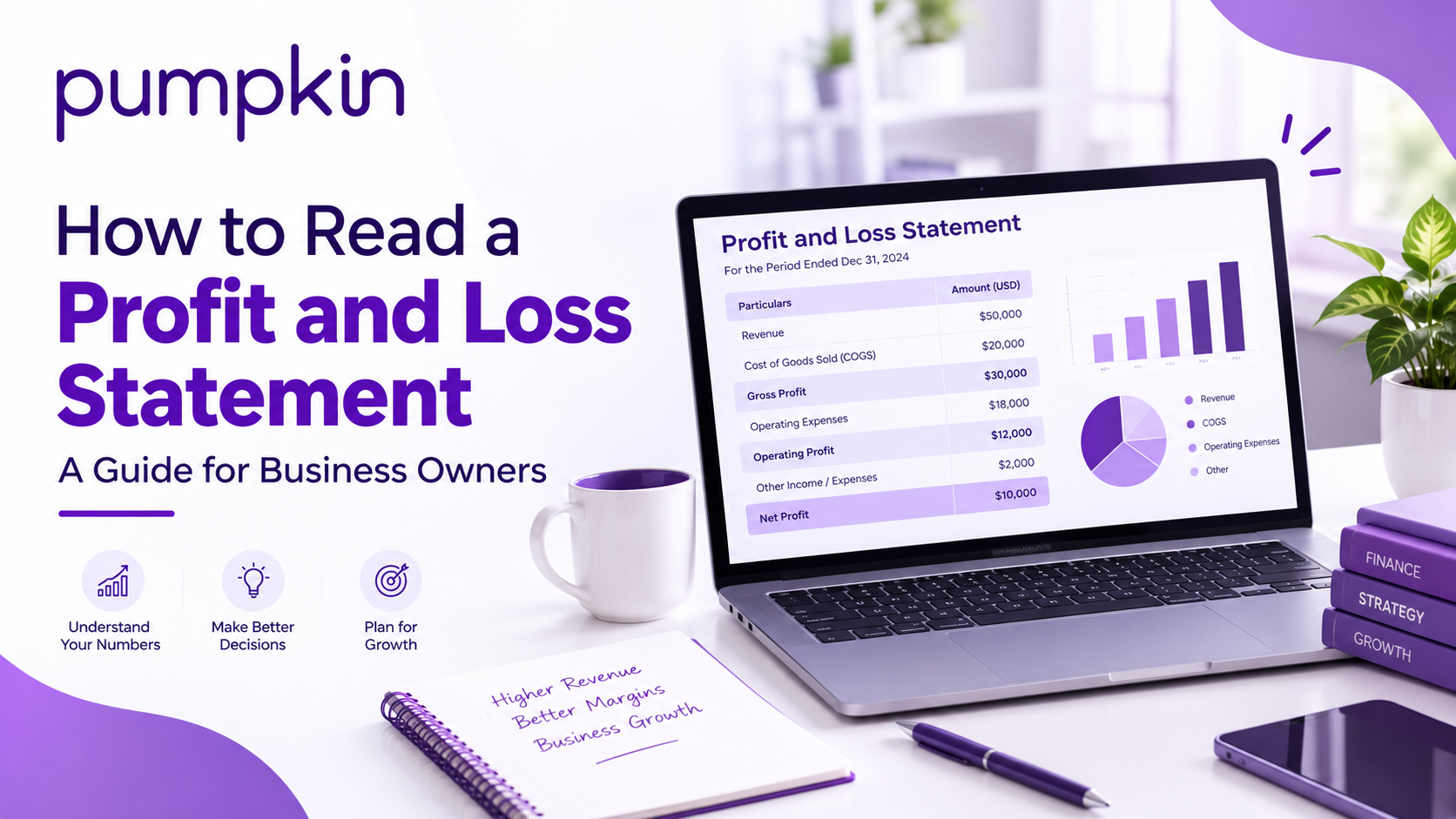
Suppose a business earns $50,000 in revenue and records $20,000 in cost of goods sold.
Gross profit = $50,000 − $20,000 = $30,000.
This means the business retains $30,000 after those direct costs, before accounting for operating expenses and other applicable items.
Gross profit is useful for evaluating whether pricing and direct costs support the business model.
4. Operating Expenses
Operating expenses are the costs associated with running the business that are not included in cost of goods sold.
Examples may include rent, advertising, software subscriptions, insurance, administrative payroll, professional fees, and utilities.
Review each category to understand where money is being spent. If software expenses or advertising costs rise significantly, determine whether the increase supports business growth or needs further review.
Do not cut expenses simply because they are high. Consider whether each cost contributes to revenue, efficiency, compliance, or customer service.
5. Operating Profit
Operating profit measures the result of core business operations after deducting applicable operating costs from gross profit.
A simplified calculation is:
Operating Profit = Gross Profit − Operating Expenses
For example, if gross profit is $30,000 and operating expenses are $18,000, operating profit is $12,000.
This figure helps owners assess the performance of their main business activities before considering items such as interest and income taxes, depending on how the statement is presented.
6. Net Profit or Net Loss
Net profit is the amount remaining after the applicable expenses and other items have been accounted for. If expenses exceed income, the business may report a net loss.
Suppose a business has $50,000 in revenue, $20,000 in cost of goods sold, $18,000 in operating expenses, and $2,000 in other expenses.
Its simplified net profit is:
$50,000 − $20,000 − $18,000 − $2,000 = $10,000.
The actual presentation can vary based on accounting methods and the items included in the report.
Net profit helps business owners understand overall profitability, but it does not necessarily show how much cash is available in the bank.
How to Read a Profit and Loss Statement Step by Step
Step 1: Confirm the Reporting Period
Check whether the statement covers a month, quarter, or full year. Comparing different periods can lead to incorrect conclusions if the time frames are not consistent.
For example, compare October with September or compare the third quarter of one year with the same quarter in the previous year.
Step 2: Review Revenue Trends
Determine whether revenue is growing, declining, or remaining stable.
Investigate major changes by reviewing sales volume, pricing, customer activity, and seasonal trends. A revenue increase is encouraging, but it should be evaluated alongside direct costs and operating expenses.
Step 3: Examine Major Expense Categories
Identify the largest expense categories and compare them with previous periods or your budget.
For example, higher payroll expenses may be reasonable if the business hired additional employees to support growth. The same increase may require investigation if sales have remained unchanged.
Step 4: Calculate Profit Margins
Profit margins show how much of each revenue dollar remains at a particular stage of the calculation.
A simplified net profit margin is:
Net Profit Margin = (Net Profit ÷ Revenue) × 100
If a business generates $10,000 in net profit from $50,000 in revenue, its net profit margin is 20%.
This means the business earned $0.20 in net profit for every $1 of revenue under the assumptions used in this example.
Compare margins over time and with relevant industry benchmarks where reliable data is available. Different industries naturally operate with different cost structures.
Step 5: Compare Actual Results With Your Budget
A P&L statement becomes more useful when compared with a budget or forecast.
If advertising costs exceed expectations, review campaign performance. If revenue is below target, investigate sales activity and customer retention. If costs are lower than planned, determine whether the savings are sustainable.
The objective is to identify meaningful differences and take appropriate action.
What a Profit and Loss Statement Cannot Tell You
A P&L statement is important, but it does not provide a complete picture of business finances.
It does not, by itself, show all assets, liabilities, outstanding loan balances, or the cash currently available. Those details require additional financial reports.
A business can report a profit but still experience cash shortages if customers have not paid their invoices or loan payments are due. Similarly, purchasing equipment or repaying loan principal can affect cash without appearing as an ordinary expense in the same way.
Review your P&L alongside your balance sheet and cash flow statement. Together, these reports provide a more complete view of financial performance and position.
Common Mistakes to Avoid When Reading a P&L Statement
One common mistake is assuming that high revenue always means a healthy business. Expenses may rise faster than sales, reducing profitability.
Another mistake is confusing profit with cash flow. Accounting profit and available cash are not always the same.
Business owners may also overlook unusual transactions, compare inconsistent reporting periods, or fail to review how expenses are categorized.
Finally, avoid making major financial decisions based on one month of results without understanding seasonality or exceptional events. Review trends and seek professional guidance when the numbers are unclear.
How Bookkeeping Helps You Understand Your P&L Statement
Accurate bookkeeping is the foundation of a reliable profit and loss statement. When income and expenses are recorded consistently and accounts are reconciled, business owners can trust their reports more confidently.
Regular bookkeeping helps identify unusual transactions, monitor expenses, compare monthly results, and prepare financial information for tax professionals.
Pumpkin Tax Co provides bookkeeping services that include transaction categorization, bank reconciliation, and financial reporting. Learn more about its bookkeeping services.
Businesses that need broader financial support can also explore Pumpkin Tax Co's tax and accounting services or visit the contact page to discuss their requirements.
Frequently Asked Questions About Profit and Loss Statements
What is a profit and loss statement in simple terms?
A profit and loss statement shows how much revenue a business earned, the expenses it incurred, and the resulting profit or loss over a specific period.
How do you calculate profit on a P&L statement?
A simplified calculation is revenue minus all applicable expenses and other relevant items. The result is net profit if positive or a net loss if negative.
What is the difference between gross profit and net profit?
Gross profit generally equals revenue minus cost of goods sold. Net profit reflects the remaining result after the applicable operating expenses and other items are considered.
How often should a small business review its P&L statement?
Many small businesses benefit from reviewing their P&L monthly. Monthly reviews can help identify spending changes, evaluate revenue trends, and address issues before they become more difficult to manage.
Does a profit and loss statement show cash flow?
No. A P&L statement reports income and expenses over a period, while a cash flow statement focuses on cash entering and leaving the business. The two reports provide different but complementary information.
Why is a P&L statement important for tax preparation?
A properly prepared P&L helps summarize business income and expenses. It can support tax preparation, but not every accounting expense necessarily receives the same treatment for tax purposes. Applicable tax rules and supporting records must be reviewed.
Can bookkeeping services help improve financial reporting?
Yes. Consistent bookkeeping helps organize transactions, reconcile accounts, and prepare financial reports. Accurate records make it easier for business owners and tax professionals to understand financial performance.
Make Better Business Decisions With Clear Financial Reports
Learning how to read a profit and loss statement gives business owners a practical way to monitor performance, understand expenses, and identify opportunities for improvement.
By reviewing revenue, gross profit, operating expenses, and net profit regularly, you can make better-informed decisions about pricing, staffing, marketing, and future investments.
For a more complete financial picture, review your P&L alongside your balance sheet and cash flow statement, and maintain accurate records throughout the year.
Need help understanding your business finances? Contact Pumpkin Tax Co to explore professional bookkeeping, financial reporting, and tax support for your business.